
'The revival of household savings and investment is the litmus test of whether we are on the road to recovery,' says Nitin Desai.

For development finance institution to succeed now, the government must stand like a rock behind it and be patient.

Not surprisingly, equity investors are bidding-up stock prices across sectors and the broader market is now more valuable than pre-Covid levels.

In a major crackdown on domestic shell companies, the government on Friday decided to take "harsh punitive" action, including freezing of their bank accounts used to launder money or evade taxes.

You can use gold as a financial instrument to diversify your portfolio into hedging against uncertainties in the market, but for ambitious returns, you must explore opportunities in other asset classes such as equities, debts and real estate, says Adhil Shetty, CEO, BankBazaar.com.
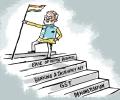
'The expectation was that Modi would become even bolder in his approach, and after only four months into his second term, we are starting to see evidence of this.'
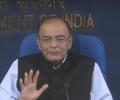
Finance ministry tells PM fiscal deficit target will be met, capex expenditure won't be cut and GDP growth will surpass 7.5%.

Regaining the lost sheen, sales of gold jewellery and coins are set to touch pre-COVID levels in volume terms on the auspicious Dhanteras as easing pandemic concerns and pent up demand saw consumers flocking to stores to buy the precious metal. Increased footfall at stores and brisk sales online as well as relatively softer gold prices compared to record Rs 57,000 per 10 grams level in August spurred increased buying, especially light weight offerings, on Tuesday. Dhanteras is considered to be auspicious for buying precious metals and other valuable items.

IMF Chief Economist Gita Gopinath also said the pickup in global growth for 2020 remains highly uncertain as it relies on improved growth outcomes for stressed economies like Argentina, Iran, and Turkey and for under-performing emerging and developing economies such as Brazil, India, and Mexico.

The Reserve Bank of India, for the second straight time, on Thursday kept its key policy rate unchanged at 5.15 per cent, maintaining its accommodative policy stance as long as it was necessary to revive growth. The central bank retained GDP growth at 5 per cent for 2019-20 and pegged it at 6 per cent for the next fiscal.

Finance Minister Arun Jaitley on Friday tabled the pre-Budget Economic Survey in the Lok Sabha.

Imports rose by 1.44 per cent to $43.44 billion in March 2019.

'When growth drops precipitously from 7% to 4.5% in four quarters, it is for all practical purposes a recession' notes T N Ninan.

Markets ended lower amid volatile trade with Sun Pharma leading the decline.

It won't be an easy ride for the markets, reckon experts, considering the multiple state elections in 2018 and general elections next year.

'Global investors expect the rupee to be more vulnerable in the downturns in the future than ever before,' notes Apoorva Javadekar.

The government would also take steps to promote exports and restrict non-essential imports, said Jaitley

'So far, the government has sanctioned more than Rs 300 billion as GST refunds,' Ansh Bhargava and Aditya Singhania point out.

Explore the map to see and compare different countries' Doing Business Index in 2015.

The five Ahmedabad-based call centres that made calls to people living in the US are Hglobal, Call Mantra, Worldwide Solution, Zoriion Communications and Sharma BPO Services.

Of the 11,000 kg imported between July 1 and August 9, around 90 per cent was brought in by two business groups which took advantage of the favourable reduction in tax incidence under GST, routing their imports through Korea.

With response tepid so far from domestic investors, these funds might soon approach FIPB for approvals.

Sources said that the capital markets regulator Securities and Exchange Board of India has come across quite a few cases where GDR route could have been used for round-tripping of funds in the name of capital-raising activities of listed companies from abroad.

In another round of economic booster, Sitharaman announced steps to help homebuyers and push exports.

'For the RBI, it is also strategic to allow the rupee to over-depreciate, then come and buy the rupee, and benefit from its appreciation. Speculators who have driven the rupee too low then make losses,' says Ashima Goyal.

IMF, which has also lowered its global economic growth forecast for 2016 and 2017 by a marginal 0.1 per cent to 3.1 and 3.4 per cent respectively, recommended six 'reform priorities' for India

Total assets under management (AUM) for September stood at Rs 20.4 lakh crore compared with Rs 20.6 lakh crore at the end of August.

Sebi to consider changes in start-up listing norms

Year 2017 will be a benign year for FII flows into India feels Akash Singhania, deputy chief investment officer, DHFL Pramerica Asset Managers.

Investors can now park money in practically all overseas firms via domestic mutual funds (MFs). The removal of this key deterrent will encourage investment in the funds.

So vaccinate employees and families, staff at home, rickshaw drivers, milkmen, service providers, shopkeepers and street vendors, says Naushad Forbes.

'Gold could return 10% to 12% in the next two-three years.'

Here's why consumers are shifting to large brands.

A K Bhattacharya digs into the yet-to-be-public report on ways to curb black money and finds out that Modi's next moves could include action on dabba trading, hawala, and education.

The rupee closed at Rs 66.21 in its last trading session.

The government on Saturday made its prior approval mandatory for foreign investments from countries that share land border with India to curb 'opportunistic takeovers' of domestic firms following the COVID-19 pandemic, a move which will restrict Foreign Direct Investment from China.

Although the first woman to hold the position of chief economist at IMF, it would be wrong to see her appointment through the lens of gender

The 50-issue NSE Nifty too cracked the 10,200-mark and hit a low of 10,108.55 before finishing 104.75 points, or 1.02 per cent down at 10,121.80.

While the COVID-19 pandemic has completely halted production and new orders, exporters say that payments have also been delayed for the shipments sent before the lockdown. Exporters say some customers are not taking delivery of the shipments because they have shut shop. Ready-made garment players had been hoping for a revival in demand in China but with the virus spreading to Europe, the US and other major markets, there are no orders coming from the major retailers.

Besides the manufacturing industry, voices in favouring the need for protectionism have also been heard from local start-ups, which at times find it tough to compete with global players that entered India with deep pockets.
